Buy blog.co.at ?
We are moving the project
blog.co.at .
Are you interested in purchasing the domain
blog.co.at ?
domain@kv-gmbh.de · 0541-91531010
Buy blog.co.at ?
How does a PID controller work?
A PID controller works by continuously calculating an error value as the difference between a desired setpoint and a measured process variable. It then uses this error value to adjust the control input to the process in order to minimize the error and keep the process variable as close to the setpoint as possible. The controller uses three terms to make these adjustments: the proportional term (P) which responds to the current error value, the integral term (I) which responds to the accumulation of past errors, and the derivative term (D) which responds to the rate at which the error is changing. By combining these three terms, the PID controller can effectively control a wide range of processes. **
What are the disadvantages of a PID controller?
One disadvantage of a PID controller is that it can be complex to tune, requiring a good understanding of the system dynamics and the controller parameters. Additionally, PID controllers may not perform well in systems with significant non-linearities or time delays, requiring more advanced control strategies. Another disadvantage is that PID controllers may not be suitable for systems with highly variable or unpredictable disturbances, as they may struggle to adapt quickly enough. Finally, PID controllers can be sensitive to changes in the system, requiring frequent retuning to maintain optimal performance. **
Similar search terms for Digital-PID-Temperature-Controller
Top-Angebote
Products related to Digital-PID-Temperature-Controller:
-
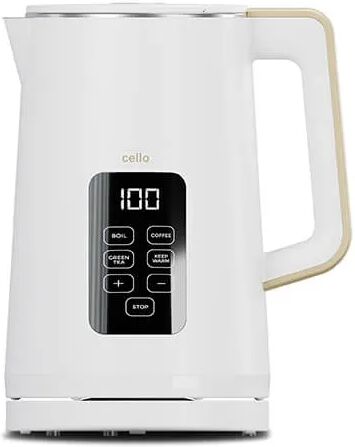
Cello Overture Natural White Temperature Controlled Digital KettleThis Cello Overture Temperature Control Digital Kettle in Natural White offers a powerful 3kW heating element and features a One Touch temperature control system with preset options for 100°C Boil, 85°C for Coffee, 75°C for Herbal Tea, and 65°C Keep Warm. It includes a sleek digital touch panel and a double wall cool touch body for added safety. With a minimum fill of 1 cup and a maximum of 7 cups, holding a total volume of 1.7 litres. The 360-degree rotating base ensures convenient handling, while the removable limescale filter and easy-clean matte housing make maintenance simple. Power: 3000W. Dimensions: 26.5(H) x 21(W) x 16(D)cm. Weight: 1.75kg.29,99 £*Shipping: 3,50 £Secure redirect to the provider
-
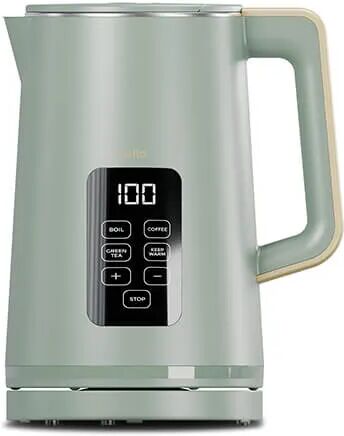
Cello Overture Sage Green Temperature Controlled Digital KettleThis Cello Overture Temperature Control Digital Kettle in Sage Green offers a powerful 3kW heating element and features a One Touch temperature control system with preset options for 100°C Boil, 85°C for Coffee, 75°C for Herbal Tea, and 65°C Keep Warm. It includes a sleek digital touch panel and a double wall cool touch body for added safety. With a minimum fill of 1 cup and a maximum of 7 cups, holding a total volume of 1.7 litres. The 360-degree rotating base ensures convenient handling, while the removable limescale filter and easy-clean matte housing make maintenance simple. Power: 3000W. Dimensions: 26.5(H) x 21(W) x 16(D)cm. Weight: 1.75kg.39,99 £*Shipping: 3,50 £Secure redirect to the provider
-
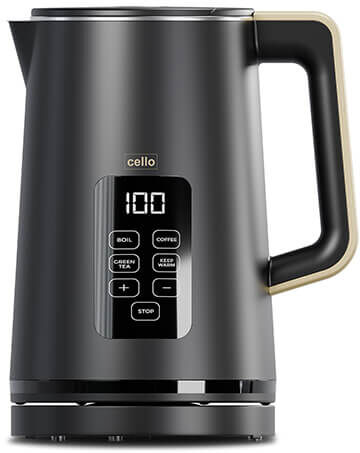
Cello Overture Ash Black Temperature Controlled Digital KettleThis Cello Overture Temperature Control Digital Kettle in Ash Black offers a powerful 3kW heating element and features a One Touch temperature control system with preset options for 100°C Boil, 85°C for Coffee, 75°C for Herbal Tea, and 65°C Keep Warm. It includes a sleek digital touch panel and a double wall cool touch body for added safety. With a minimum fill of 1 cup and a maximum of 7 cups, holding a total volume of 1.7 litres. The 360-degree rotating base ensures convenient handling, while the removable limescale filter and easy-clean matte housing make maintenance simple. Power: 3000W. Dimensions: 26.5(H) x 21(W) x 16(D)cm. Weight: 1.75kg.39,99 £*Shipping: 3,50 £Secure redirect to the provider
-
Does a typical modern car have a PID controller?
Yes, a typical modern car does have a PID (Proportional-Integral-Derivative) controller. The PID controller is commonly used in the car's engine control unit (ECU) to regulate various parameters such as fuel injection, air-fuel mixture, and engine speed. The PID controller helps to maintain optimal performance and efficiency of the engine by continuously adjusting these parameters based on feedback from sensors. Overall, the PID controller plays a crucial role in the smooth operation of modern car engines. **
-
What is the correct grammar for digital temperature controller for freezer-refrigerator?
The correct grammar for a digital temperature controller for a freezer-refrigerator would be: "Digital temperature controller for freezer-refrigerator." This phrase follows the standard format for describing a product, with the type of product (digital temperature controller) followed by the intended use or application (freezer-refrigerator). This format clearly communicates the purpose of the product and its intended use. **
-
What is the difference between a P controller, an I controller, a D controller, and a PID controller?
A P controller (proportional controller) adjusts the control variable in proportion to the error signal, meaning it responds to the current error value. An I controller (integral controller) takes into account the accumulation of past errors over time and adjusts the control variable to eliminate any steady-state error. A D controller (derivative controller) responds to the rate of change of the error signal and helps to anticipate future errors. A PID controller combines all three components (proportional, integral, and derivative) to provide a more comprehensive and effective control system, taking into account the current error, past errors, and future error trends. **
-
What are applications and examples of applications for a PID controller?
A PID controller is a type of feedback control system that is widely used in industrial processes, robotics, and automation. It is used to control the behavior of a system by continuously adjusting the input based on the difference between the desired setpoint and the actual output. Some common applications of PID controllers include temperature control in ovens and HVAC systems, speed control in motors and drives, and pressure control in hydraulic systems. PID controllers are also used in chemical and process industries to maintain precise control over variables such as flow rate, level, and composition. **


Can someone explain the PID controller in the picture to me?
The PID controller in the picture is a type of control system that is used to regulate a process by continuously calculating an error value as the difference between a desired setpoint and a measured process variable. The controller then uses proportional, integral, and derivative terms to calculate the control output to minimize the error and bring the process variable closer to the setpoint. The proportional term responds to the current error, the integral term responds to the accumulation of past errors, and the derivative term responds to the rate of change of the error. By adjusting the weights of these terms, the PID controller can effectively regulate a wide range of processes. **
How can one implement a PID motor controller with a Raspberry Pi?
To implement a PID motor controller with a Raspberry Pi, you will need to connect the Raspberry Pi to a motor driver that can control the motor. You can use the GPIO pins on the Raspberry Pi to send signals to the motor driver to control the speed and direction of the motor. Then, you can write a PID control algorithm in a programming language like Python to calculate the appropriate control signals based on the desired and actual motor speed. Finally, you can continuously adjust the control signals sent to the motor driver based on the PID algorithm's output to achieve the desired motor speed with minimal error. **
Top-Angebote
Products related to Digital-PID-Temperature-Controller:
-
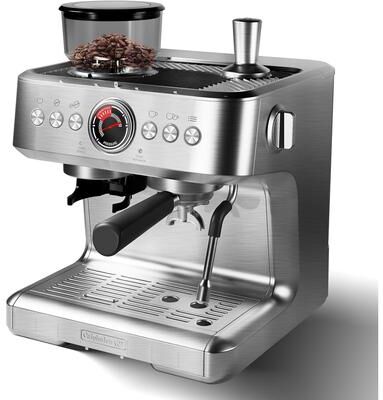
YUN 20 Bar Machine with Grinder, Machine with Milk Frother, PID Temperature Control, Semi-AutomaticThis machine with grinder combines fresh bean grinding, brewing, and milk frothing in one space-saving unit, helping simplify daily coffee routines without extra countertop tools.455,96 $*Shipping: 0,00 $Secure redirect to the provider
-
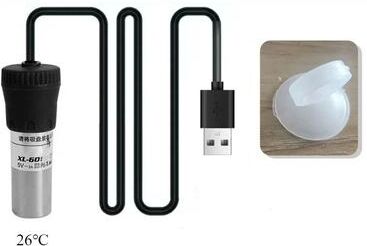
Uplift Essentials Aquarium Heater Adjustable Submersible USB Mini Fish Tank Heater With Digital Display Temperature Controller 20W 25W 20wKeep your fish healthy and comfortable with the Aquarium Heater Adjustable Submersible USB Mini Heater. Designed for nano and mini tanks up to 4L, this compact yet powerful heater provides precise temperature control from 18C to 34C (64.4F 93.2F)....40,97 $*Shipping: 0,00 $Secure redirect to the provider
-
Cello Overture Natural White Temperature Controlled Digital KettleThis Cello Overture Temperature Control Digital Kettle in Natural White offers a powerful 3kW heating element and features a One Touch temperature control system with preset options for 100°C Boil, 85°C for Coffee, 75°C for Herbal Tea, and 65°C Keep Warm. It includes a sleek digital touch panel and a double wall cool touch body for added safety. With a minimum fill of 1 cup and a maximum of 7 cups, holding a total volume of 1.7 litres. The 360-degree rotating base ensures convenient handling, while the removable limescale filter and easy-clean matte housing make maintenance simple. Power: 3000W. Dimensions: 26.5(H) x 21(W) x 16(D)cm. Weight: 1.75kg.29,99 £*Shipping: 3,50 £Secure redirect to the provider
-
How does a PID controller work?
A PID controller works by continuously calculating an error value as the difference between a desired setpoint and a measured process variable. It then uses this error value to adjust the control input to the process in order to minimize the error and keep the process variable as close to the setpoint as possible. The controller uses three terms to make these adjustments: the proportional term (P) which responds to the current error value, the integral term (I) which responds to the accumulation of past errors, and the derivative term (D) which responds to the rate at which the error is changing. By combining these three terms, the PID controller can effectively control a wide range of processes. **
-
What are the disadvantages of a PID controller?
One disadvantage of a PID controller is that it can be complex to tune, requiring a good understanding of the system dynamics and the controller parameters. Additionally, PID controllers may not perform well in systems with significant non-linearities or time delays, requiring more advanced control strategies. Another disadvantage is that PID controllers may not be suitable for systems with highly variable or unpredictable disturbances, as they may struggle to adapt quickly enough. Finally, PID controllers can be sensitive to changes in the system, requiring frequent retuning to maintain optimal performance. **
-
Does a typical modern car have a PID controller?
Yes, a typical modern car does have a PID (Proportional-Integral-Derivative) controller. The PID controller is commonly used in the car's engine control unit (ECU) to regulate various parameters such as fuel injection, air-fuel mixture, and engine speed. The PID controller helps to maintain optimal performance and efficiency of the engine by continuously adjusting these parameters based on feedback from sensors. Overall, the PID controller plays a crucial role in the smooth operation of modern car engines. **
-
What is the correct grammar for digital temperature controller for freezer-refrigerator?
The correct grammar for a digital temperature controller for a freezer-refrigerator would be: "Digital temperature controller for freezer-refrigerator." This phrase follows the standard format for describing a product, with the type of product (digital temperature controller) followed by the intended use or application (freezer-refrigerator). This format clearly communicates the purpose of the product and its intended use. **
Similar search terms for Digital-PID-Temperature-Controller
-
Cello Overture Sage Green Temperature Controlled Digital KettleThis Cello Overture Temperature Control Digital Kettle in Sage Green offers a powerful 3kW heating element and features a One Touch temperature control system with preset options for 100°C Boil, 85°C for Coffee, 75°C for Herbal Tea, and 65°C Keep Warm. It includes a sleek digital touch panel and a double wall cool touch body for added safety. With a minimum fill of 1 cup and a maximum of 7 cups, holding a total volume of 1.7 litres. The 360-degree rotating base ensures convenient handling, while the removable limescale filter and easy-clean matte housing make maintenance simple. Power: 3000W. Dimensions: 26.5(H) x 21(W) x 16(D)cm. Weight: 1.75kg.39,99 £*Shipping: 3,50 £Secure redirect to the provider
-
Cello Overture Ash Black Temperature Controlled Digital KettleThis Cello Overture Temperature Control Digital Kettle in Ash Black offers a powerful 3kW heating element and features a One Touch temperature control system with preset options for 100°C Boil, 85°C for Coffee, 75°C for Herbal Tea, and 65°C Keep Warm. It includes a sleek digital touch panel and a double wall cool touch body for added safety. With a minimum fill of 1 cup and a maximum of 7 cups, holding a total volume of 1.7 litres. The 360-degree rotating base ensures convenient handling, while the removable limescale filter and easy-clean matte housing make maintenance simple. Power: 3000W. Dimensions: 26.5(H) x 21(W) x 16(D)cm. Weight: 1.75kg.39,99 £*Shipping: 3,50 £Secure redirect to the provider
-
Arctic Hayes Compact Digital Multimeter with Temperature FunctionArctic Hayes Compact Digital Multimeter with Temperature Function – Tough, Accurate & Versatile The Arctic Hayes AH113 is a rugged, auto-ranging multimeter built for electricians, engineers and technicians who need accurate diagnostics on site. It measures voltage, current, resistance, capacitance, frequency and temperature, with 6000 count true RMS accuracy for reliable readings on both linear and non-linear loads. A temperature function covering -20°C to +1000°C is included via a supplied 1m K-Type thermocouple and adaptor, adding thermal measurement to the meter's capabilities without a separate instrument. Non-contact voltage (NCV) detection allows quick identification of live circuits, and Max/Min and Hold functions make it easier to capture and review readings during diagnostic work. A backlit display and built-in flashlight aid visibility in da32,28 £*Shipping: 5,00 £Secure redirect to the provider
-
Arctic Hayes Digital Clamp Meter With Temperature FunctionArctic Hayes Digital Clamp Meter with Temperature Function – 600A AC Professional Accuracy & Safety The Arctic Hayes AH206 is a clamp meter for electricians, engineers and technicians needing current, voltage and temperature measurement in one instrument. It measures AC current up to 600A via the clamp jaw, without needing to disconnect the circuit, and AC/DC voltage up to 600V. A large 25mm trigger jaw and rotary dial make switching between functions straightforward. True RMS accuracy with a 6000 count display gives reliable readings for AC/DC voltage, current and other measurements. A temperature function extends the range to -20°C to +1000°C, using the supplied 1m K-Type thermocouple and adaptor, so temperature checks can be carried out with the same instrument rather than a separate tool. A double colour backlit screen and built46,56 £*Shipping: 5,00 £Secure redirect to the provider
-
What is the difference between a P controller, an I controller, a D controller, and a PID controller?
A P controller (proportional controller) adjusts the control variable in proportion to the error signal, meaning it responds to the current error value. An I controller (integral controller) takes into account the accumulation of past errors over time and adjusts the control variable to eliminate any steady-state error. A D controller (derivative controller) responds to the rate of change of the error signal and helps to anticipate future errors. A PID controller combines all three components (proportional, integral, and derivative) to provide a more comprehensive and effective control system, taking into account the current error, past errors, and future error trends. **
-
What are applications and examples of applications for a PID controller?
A PID controller is a type of feedback control system that is widely used in industrial processes, robotics, and automation. It is used to control the behavior of a system by continuously adjusting the input based on the difference between the desired setpoint and the actual output. Some common applications of PID controllers include temperature control in ovens and HVAC systems, speed control in motors and drives, and pressure control in hydraulic systems. PID controllers are also used in chemical and process industries to maintain precise control over variables such as flow rate, level, and composition. **
-
Can someone explain the PID controller in the picture to me?
The PID controller in the picture is a type of control system that is used to regulate a process by continuously calculating an error value as the difference between a desired setpoint and a measured process variable. The controller then uses proportional, integral, and derivative terms to calculate the control output to minimize the error and bring the process variable closer to the setpoint. The proportional term responds to the current error, the integral term responds to the accumulation of past errors, and the derivative term responds to the rate of change of the error. By adjusting the weights of these terms, the PID controller can effectively regulate a wide range of processes. **
-
How can one implement a PID motor controller with a Raspberry Pi?
To implement a PID motor controller with a Raspberry Pi, you will need to connect the Raspberry Pi to a motor driver that can control the motor. You can use the GPIO pins on the Raspberry Pi to send signals to the motor driver to control the speed and direction of the motor. Then, you can write a PID control algorithm in a programming language like Python to calculate the appropriate control signals based on the desired and actual motor speed. Finally, you can continuously adjust the control signals sent to the motor driver based on the PID algorithm's output to achieve the desired motor speed with minimal error. **
* All prices are inclusive of VAT and, if applicable, plus shipping costs. The offer information is based on the details provided by the respective shop and is updated through automated processes. Real-time updates do not occur, so deviations can occur in individual cases. ** Note: Parts of this content were created by AI.